AI agents · Intent to resolution · AgendaPro · 2026
From a patient’s message to a booked treatment.
- Role
- Set up and lead AgendaPro's AI x Health unit from its first day. A team of 15, reporting to the CEO. I designed how the agents behave, and I write code.
- Users
- Patients of clinics across Latin America, and the clinic teams who work next to the agents.
- Scope
- Ads and leads, the agent on WhatsApp and Instagram, reminders, dashboards, pricing and the P&L.
- Status
- Live in Chile, Mexico, Argentina and Peru. One expert agent per healthcare specialty.
Nobody answers at 9pm.
The problem
Clinics across Latin America run on WhatsApp, and the person answering it is also running the front desk.
So the messages that keep patients coming are the first to slip. A new patient who writes after closing gets an answer the next morning, if they haven't booked somewhere else. Nobody writes to the patient who stopped at session four of ten. So we built an agent that lives on the clinic's own number. It books, reschedules, answers and hands over to a person when it should. And we sold it the way clinics think about it: as a hire.
Paying accounts, six months in
6→100+
From the end of May to September 2026. AI revenue grew almost sixfold, and no new account cancelled in its first five months.
Win new patients.
Clinics pay for ads on Instagram and Google, then lose track of who wrote. Now every ad is followed from the first message to the chair.
Your campaigns
The journey of your campaigns
Talk to every patient.
The agent answers on the clinic's own WhatsApp and Instagram, at any hour. When a person should step in, it says so, and the team picks up in the same inbox.
Swipe for the list of chats →
Chats
+Booked an evaluation at 23:42
UnassignedCan I pay the pack in two parts?
1UnassignedBooked: Thursday 18:00, session 1 of 10
UnassignedRemembered his plan: session 6 of 10 booked
UnassignedCame from the ad "Back to running"
UnassignedVoice note: moved to Monday 09:00
Unassigned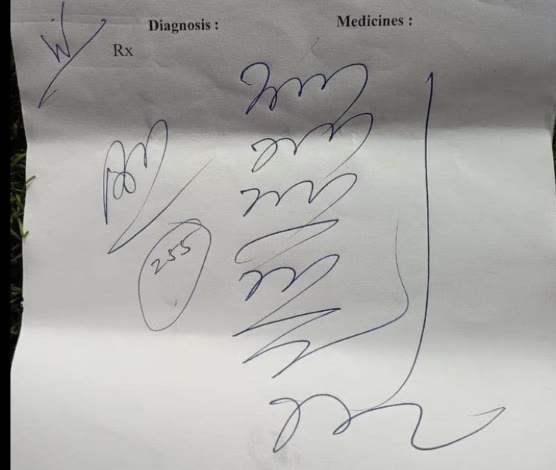
A voice note at 22:58.
Many patients don't type. The agent listens to the audio and understands what she needs.
A handwritten order.
A photo is enough. The agent reads the treatment, the sessions and the doctor, even in handwriting.
The whole treatment, booked.
It offers the first session with the right practitioner and keeps the order on file. Nobody from the team had to step in.
The rules behind every agent.
Patients only come back to an agent they trust. The same four rules run in every specialty, and they are the part I designed most carefully.
01
Ask, don't guess.
When more than one answer fits, it asks one short question and offers the options.
"Two of our physios work Thursdays. Dr. Soto at 10:30 or Dra. Lagos at 17:00?"
02
Own the mistake in one line.
Say it was wrong, fix it, and show what changed in the booking. No long apology.
"Sorry, my mistake. You're now on Friday 09:00, and Thursday is cancelled."
03
Clinical things go to a person.
Symptoms, results and medication are never answered by the model. Emergencies get safety advice first.
Chest pain after a session: call emergency services now, then the team.
04
A hand-over is never a dead end.
The patient knows a person will reply, in the same chat. The team gets the whole conversation.
"The team will reply here, in this chat."
At one clinic running the agent: about 9 seconds to answer, at any hour, 84% of conversations handled with no one from the team stepping in, and 74% of patients who wanted an appointment booked one.
One agent per specialty, physio, nutrition and dental among them, all built from the same patterns. A fix to a pattern reaches every agent that uses it, and the next specialty starts from there, not from zero.
Bring them back.
Most patients don't leave a treatment on purpose. They just don't book the next session. The agent writes first, at the moments when patients usually drift away.
Automations
Asks the patient to confirm two days before. A no becomes a new time, and the slot goes back on the calendar.
Three hours before, with the address and the practitioner's name.
Someone in a treatment plan has nothing booked. Lía offers the next session before the plan goes cold.
Patients who stopped coming get one friendly message, with a time ready to say yes to.
Someone missed a visit. An hour later, Lía writes with two new times.
A treatment quote has gone quiet for three days. Lía answers questions and offers a first time.
Around the same inbox: messages to a group of patients by tag, and follow-up of treatment quotes until the patient says yes.
See what works.
Owners don't read logs. Every cycle, the dashboard says in one sentence what the agent did, and counts what happened while the doors were closed.
AI dashboard
This cycle, ✦ Lía booked 86 appointments on her own and helped your team with 41 more.
Who answered your patients
How Lía spends her time
- Booking46%
- Answering questions29%
- Rescheduling13%
- Reminders6%
- Other6%
24 on her own and 7 with your help. 22% of the bookings Lía handled came at night or at the weekend. 36% of all her work happened while your clinic was closed.
From first message to appointment
Building the business.
I set up and lead the AI x Health unit from its first day, 30 March 2026, reporting to the CEO. I own the strategy, roadmap, pricing, hiring and the P&L.
Design got me into the room. Owning the P&L kept me there. I decide what we build, what it costs, who sells it and when it ships.
The bet: clinics pay for the work the agent does.
The idea
Clinics get someone answering patients on their WhatsApp, at any hour. So the agent is priced by the work it does, not like software.
The agent answers patients, books, reschedules, reminds and confirms. So it's priced by conversation, which covers all of that, not by booking, which covers 2 of its 8 kinds of action, and not as a share of sales, which is easy to game. The old AI add-on had been priced like software, and only 2.2% of the health clinics on AgendaPro used it.
The team: 15 people across design, engineering and deployment, the CTO among them as an individual contributor.
Revenue per account vs the legacy product
1→3.9×
Average monthly revenue per new account, against the legacy AI add-on. Strategy review, June 2026.
Six months in.
From the unit's first day, 30 March 2026, to September.
Paying accounts
100+
Up from 6 at the end of May.
AI revenue
+483%
April to September. Almost sixfold.
Churn, new accounts
0%
20 of 20 still active after their first five months. A small group, so read it as an early sign.
Countries
4
Chile, Mexico from June, Argentina, and Peru from September.
Chosen, and what it beat.
Each call chose something and said no to something else, for a reason.
+45%conversion
One agent, with a short note per specialty.
Not one generic agent, and not four separate agents, which meant 13 more days of build.
1–3services per catalogue
First workflow: treatment adherence, not cross-sell.
Most clinics sell one to three services, which puts a ceiling on selling them more. So the first workflow helps patients finish the treatment they started.
90+clinics moved
Moved every legacy clinic to the new agent.
In one quarter, as a defense against churn. Accounts that never connected were left out. It saved two cancellations on the way.
Making it pay.
The cost had to come down so the price could work.
Monthly model cost, index (before = 100)
−97%
I moved the agent to a new LLM provider in two weeks.
Margin on the agents
The switch roughly doubled the margin.
How it scales
A pair per clinic, and a number that says when it's ready.
I designed the operating model. A forward-deployed pair takes each clinic from signed contract to an agent that runs on its own, and it only goes live alone once it passes a measured quality threshold.
The CEO's note, July 2026
"Real product-market fit in Health. Zero churn on the new agents."
Written about three months after the unit's first day.
Accounts, revenue and margin from AgendaPro's weekly reports, September 2026. Churn measured on the first 20 new accounts. Product visuals are interpretations of the real product, with an invented clinic and patients.